Trust guide
Cheap Hollywood Smile Turkey Red Flags
A very low quote can be worth exploring, but it should be compared carefully. The main question is not whether the price looks cheap. It is whether the treatment scope is clear enough to compare fairly.
Quick answer
Cheap does not automatically mean unsafe, and expensive does not automatically mean better. The real red flag is lack of clarity. If a quote is very low but tooth count, material, package inclusions, exclusions, or follow-up terms remain vague, the offer becomes hard to compare and harder to trust.
How very cheap smile quotes usually look
Cheap offers often attract attention because the starting price looks far below the typical market. That can be legitimate in some cases, but it only becomes meaningful when the treatment scope is clear enough to compare with the rest of the market.
| Quote type | How to read it |
|---|---|
| Very low starting quote | Check whether the tooth count, material, and exclusions are fully stated in writing. |
| Mid-range quote | Usually the most useful baseline for comparing scope and included items. |
| Premium quote | May reflect more teeth, stronger clinic positioning, wider support, or more design-led planning. |
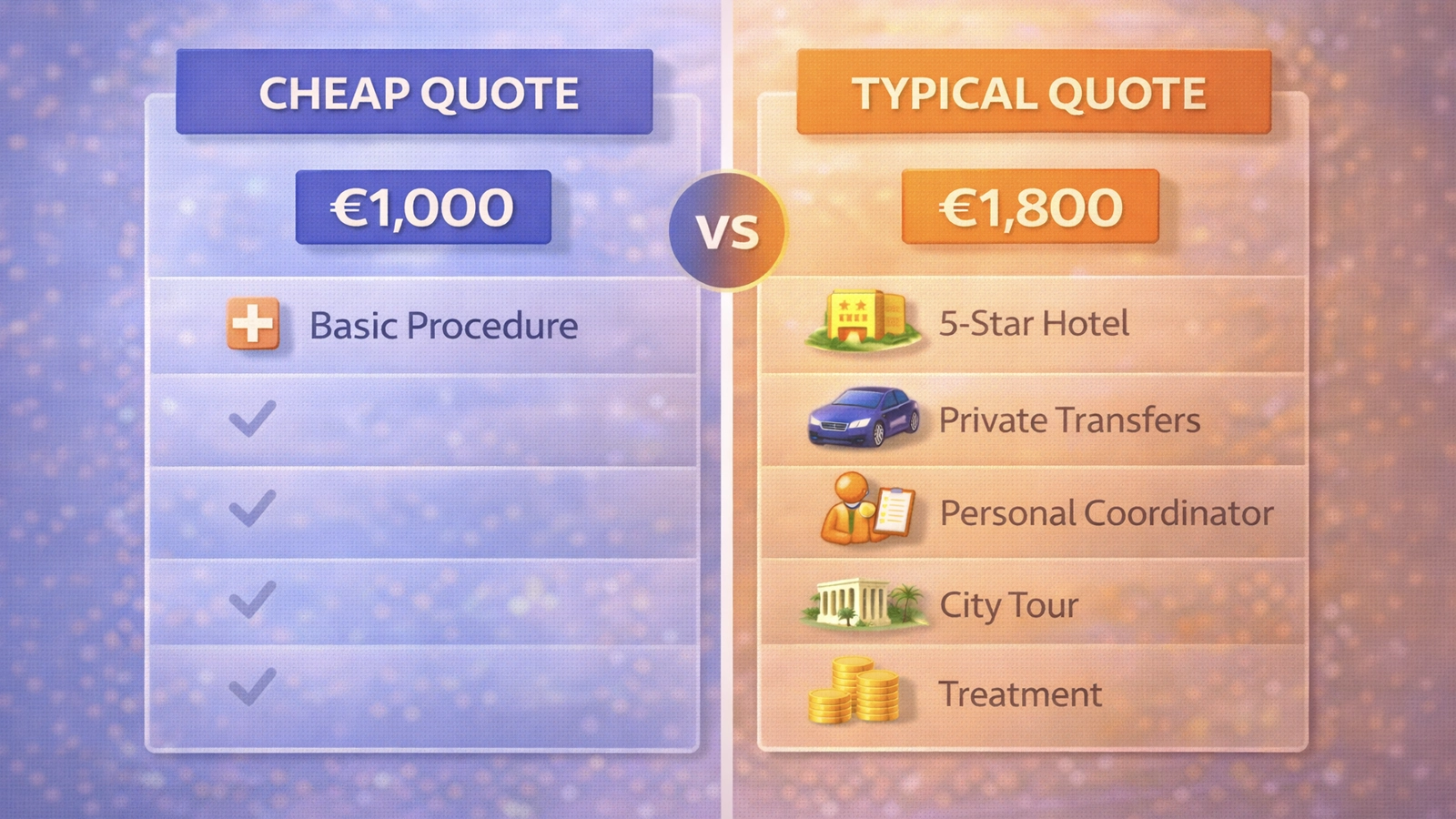 Cheap Quote vs Typical Quote Comparison
Compare a low headline price with a more complete Turkey dental quote to see what may be missing.
 Red Flags in Very Cheap Hollywood Smile Quotes
Review common warning signs such as vague material wording, missing diagnostics and unclear revision terms.
What a red flag means on this site
This guide uses red flag in a practical sense. It does not mean a reader should panic. It means the quote leaves out information that would normally make comparison easier.
Vague scope
The quote does not clearly explain how many teeth are included or what type of restoration is being discussed.
Vague package wording
The offer sounds bundled, but it is still unclear whether hotel, transfers, scans, or aftercare support are actually included.
Common red flags in very cheap offers
No clear material information
If the material is unclear, the quote becomes difficult to compare with material-specific pages such as E-max or zirconia guides.
No clear tooth count
A low price can look attractive until the reader realizes the scope covers fewer treated teeth than expected.
No exclusion list
Quotes are easier to trust when they make both inclusions and exclusions visible rather than leaving the patient to discover them later.
No explanation of changes
If the quote might change after consultation, readers should understand why and under what circumstances.
Questions to ask before comparing the quote
| Question | Why it matters |
|---|---|
| How many teeth are included? | A very low total may reflect a smaller scope than the reader expects. |
| Which material is being quoted? | Material ambiguity makes price comparisons unreliable. |
| What is included besides treatment? | Bundled support can change how a quote should be interpreted. |
| What is excluded? | Exclusions make hidden costs easier to spot early. |
| What could change later? | This shows whether the quote is fixed or still provisional. |
How to compare cheap offers more carefully
A very cheap offer should not be dismissed automatically. It should be decoded. The more transparent the provider is about scope, materials, exclusions, and change points, the easier it becomes to compare a low quote on its real merits instead of its headline number alone.
- Compare the same number of teeth
- Compare the same material category
- Separate treatment pricing from travel and support items
- Ask what could move the total upward later
The main issue is not whether an offer is cheap. The main issue is whether the offer is clear enough to compare fairly.
Cheap does not always mean risky — unclear usually does
A lower quote can still be legitimate
Lower pricing alone is not the warning signal. The real issue is whether the treatment scope, timeline, and exclusions are transparent enough to compare.
Missing detail matters more than bold claims
Many weak offers use certainty and simplicity to avoid explaining what is excluded or still undecided.
Urgency can replace clarity
If a quote pushes fast commitment before written details are shared, the risk is usually higher than the discount itself.
Independent checking lowers risk
Readers should verify provider status, ask for a structured quote, and compare the same treatment scope before acting on any low offer.
Documents or details worth requesting
- A written quote showing inclusions and exclusions.
- A clear statement of the number of teeth and restoration type.
- A basic timeline for appointments, temporaries, and review steps.
- Written clarification of what happens if extra work becomes necessary.
- Enough provider and planning detail to allow independent checking.
Useful external references for independent checks
For official Turkish health tourism context and provider verification routes, see Trusted Sources. Start with the Ministry of Health and HealthTürkiye resources rather than relying only on promotional pages.
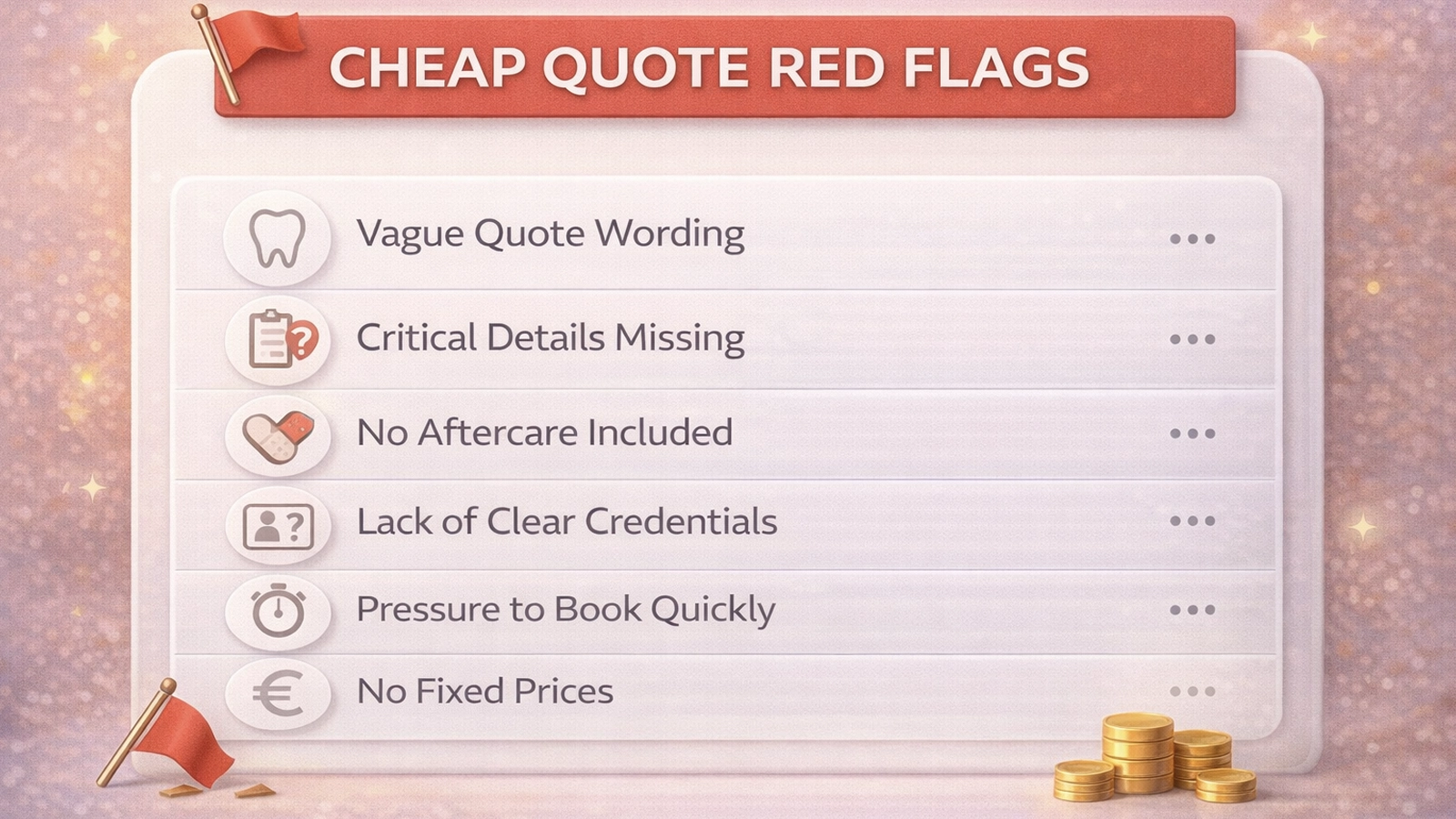 Cheap Quote Red Flags Visual
Use this quick visual checklist when an offer looks far below the usual Hollywood Smile cost range in Turkey.
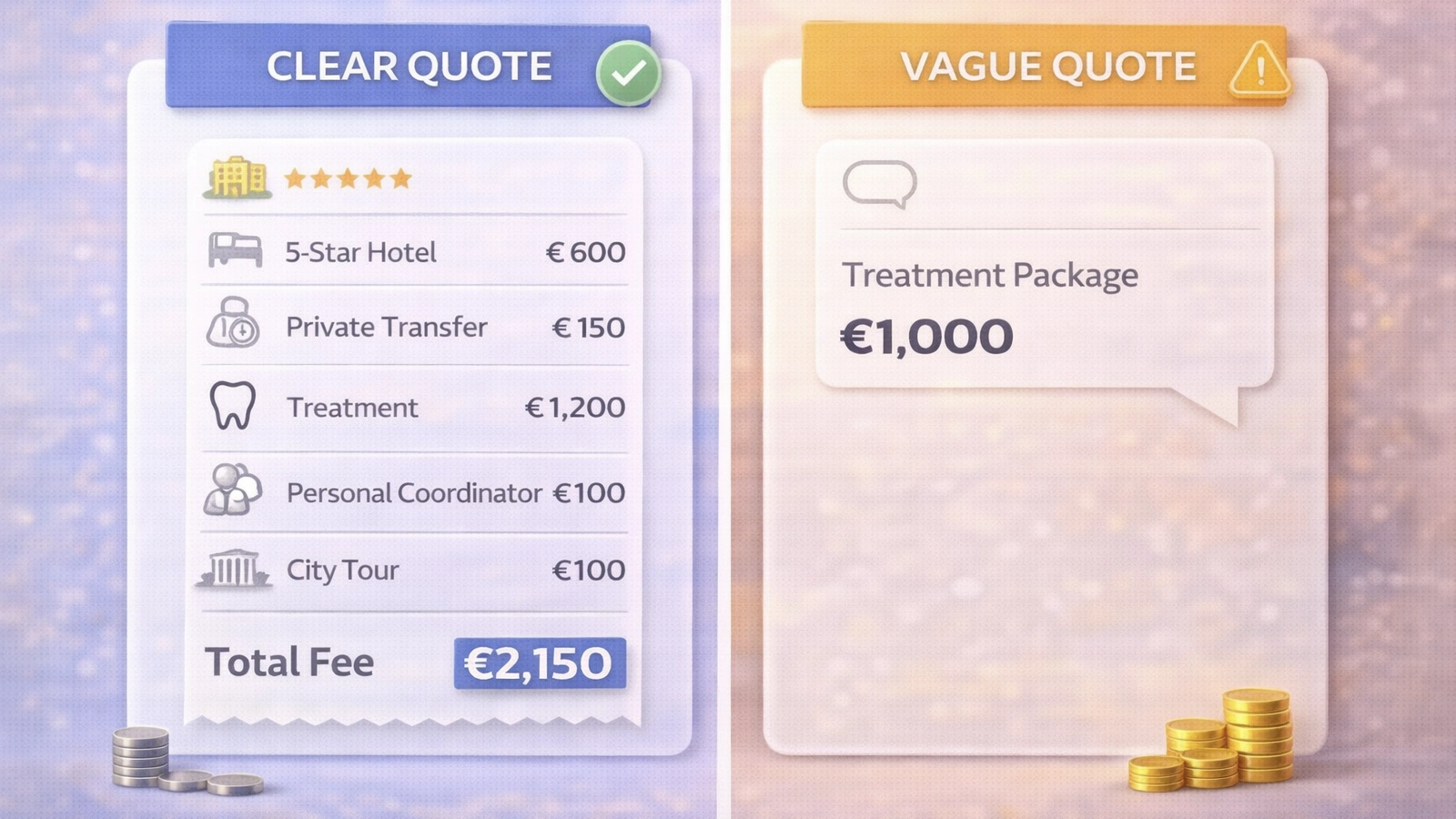 Clear Quote vs Vague Quote Comparison
Compare itemized quote details with headline-only pricing before deciding which offer is actually safer.
 Cheap Quote vs Transparent Quote Checklist
Spot missing details in low offers by checking itemized treatment scope, material type and follow-up terms.
These visuals support trust-focused reading and make the page easier to scan on mobile.
Related guides
Continue your research
Use these next if you want to move from this page into the closest cost, package, comparison, or trust guides.
Read this guide in context
This page works best when it is read alongside the broader cost, comparison, planning, and transparency guides on the site.
Frequently asked questions
No. The more useful question is whether the treatment scope and quote structure are clear enough to compare properly.
Usually it is lack of clarity: missing tooth count, unclear material, vague inclusions, or no explanation of what could change later.
No. They should compare them more carefully and check whether the quoted scope is genuinely comparable with the alternatives.